

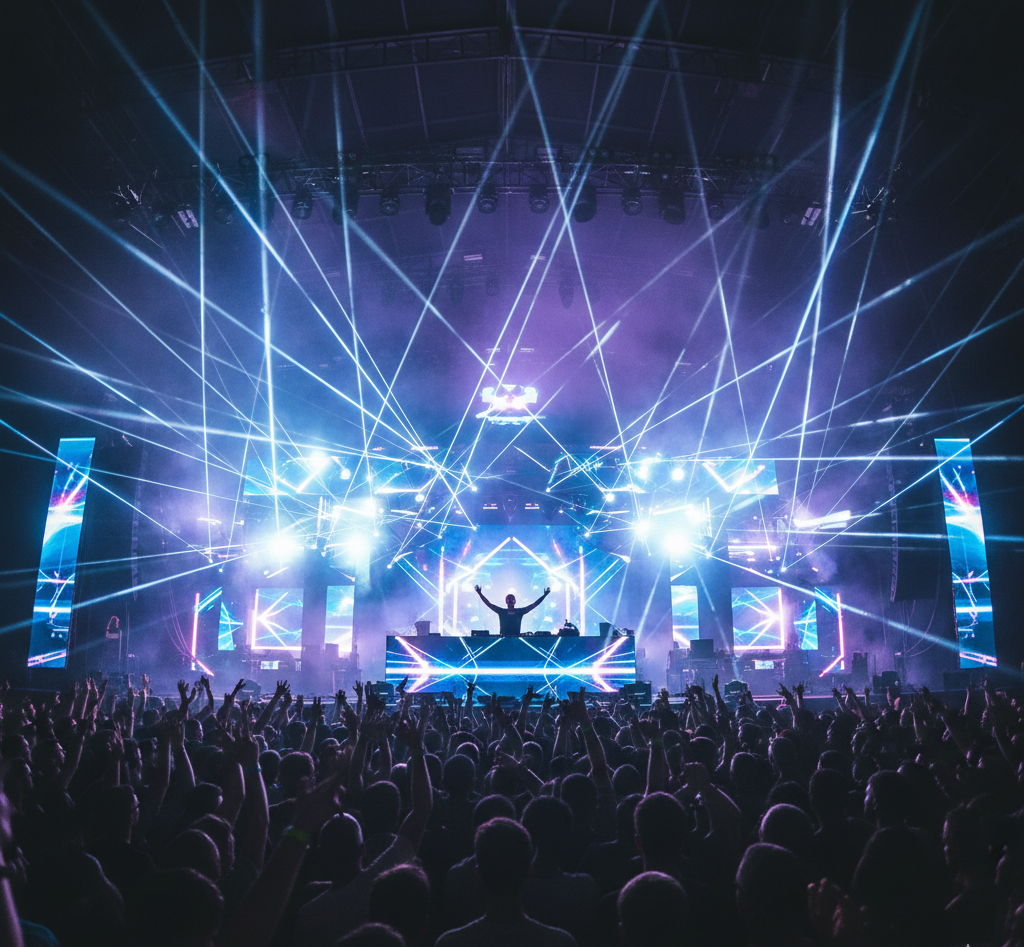
A concert is a chaotic symphony of light, motion, and raw emotion.[1] For a photographer, it is one of the most challenging environments to master. You are dealing with rapidly shifting stage lights, high-speed movement, and the pressure of capturing a “once-in-a-lifetime” drop or a singer’s high note.
At Amethist Media, we don’t just take pictures of performances; we capture the energy that vibrates through the crowd. Whether we are shooting at a high-octane lounge in Netaji Subhash Place (NSP) or a massive music festival on the outskirts of Delhi, our approach is defined by technical precision and artistic instinct.
Here is how we master the “facet of live energy.”
1. The Low-Light Gear Kit
Concerts are notoriously dim, and flash is almost always forbidden (it ruins the mood and distracts the artist).[2] To thrive in the dark, you need “Fast Glass.”
- The Lenses: Our go-to lenses are the 70-200mm f/2.8 for tight emotional close-ups from the pit, and a 24-70mm f/2.8 for those wide, sweeping crowd shots that show the scale of the event.
- The Body: We use high-ISO performing sensors (like the Sony A7S or Canon R series) that can push to ISO 3200 or 6400 without losing the “Brilliance” of the shot to digital noise.
2. Manual Mastery: The Exposure Triangle
In concert photography, “Auto” mode is your enemy. The stage lights will trick your camera’s meter every time.
- Shutter Speed: To freeze a guitarist mid-jump or a drummer in motion, we never drop below 1/200s. For high-energy rock or EDM, we push to 1/500s.
- Aperture: We stay “Wide Open” (f/1.8 to f/2.8) to let in every possible photon of light and create that beautiful, blurry background (bokeh) that makes the artist pop.
- ISO: Don’t fear the grain.[1] A sharp, slightly grainy photo is a masterpiece; a clean, blurry photo is a mistake.
3. Timing the “Apex” Moment
Great concert photography is about anticipation. We don’t just spray and pray; we look for the “Apex” moments:
- The moment the lead singer reaches back for a high note.
- The split second the CO2 jets or pyrotechnics go off.
- The crowd’s reaction when the beat finally drops.
By studying the artist’s “rhythm” during the first three songs, our team predicts these peaks before they happen.
4. Navigating the Delhi Scene: From Lounges to Stadiums
North West Delhi is a growing hub for live entertainment. From the energetic DJ sets at Xpose Lounge (NSP) to the massive musical nights at Pitampura’s premier event spaces, the vibe is unique.
- Lounge Shoots: Focus on the intimacy and the “vibe”—the interaction between the DJ and the front row.
- Festival Shoots: Focus on the “Scale”—using wide angles to capture thousands of hands in the air against the Delhi skyline.
5. Post-Production: The “Amethyst” Glow
A raw concert photo often looks “messy” due to clashing stage lights (reds and purples can be particularly harsh on skin tones). In our Vardhman Corporate Plaza studio, our editors use advanced color grading to:
- Balance skin tones under neon lights.
- Enhance “Light Rays” and haze for a more atmospheric, cinematic look.
- Apply the signature Amethist Media high-contrast finish that makes the colors scream off the screen.
The Amethist Signature: Live in Every Frame.
Led by our Chief Photographer and Director, Amethist Media (Irfan Media Pvt Ltd) provides elite-tier coverage for artists, bands, and event promoters. We don’t just document the show; we help you sell out the next one.
Planning a tour or a high-profile gig?
Visit our flagship studio at Unit No 353, 3rd Floor, Vardhman Corporate Plaza, NSP, or email us at info@amethistmedia.com to book your concert coverage.